Reading: Next Sunday in Detroit. See you there?

Here is a notice forwarded by Ann Holdreith, Hostess of the Musing Series at the Scarab Club. I’ll be reading next Sunday at 2:30pm. Hope to see you there!

MUSING Poetry and Music Gathering

 Hosted by Ann Holdreith and the Scarab Club
 Sunday September 18, 2:30-4:30

Robert Fanning

One of Michigan’s premier poets, his powerful skill & depth reaches into your heart and changes you. Author of American Prophet, The Seed Thieves and Old Bright Wheel. Published in Poetry, Ploughshares, Shenandoah, & The Atlanta Review. Creative Artist Grant, Inkwell Poetry Award, & the Foley Poetry Award.

Tim Clark

Tim’s stage presence is charismatic with a strong, resonant voice that ranges fluidly from bass to the upper register. His work is soulful, yet highly energetic. Tim accompanies himself with intricate guitar work and djembe drum.

Open Mic Poets and Musicians Welcome

THE HISTORIC SCARAB CLUB

217 Farnsworth, Detroit 48202 (Just behind the DIA, east of John R.)

248 583-7765www.annholdreith.com  www.springfed.org


Pumpkins, Cider, Poetry

Oaken Transformations Sculpture & Poetry Walk is pleased to announce collaboration with the Michigan State University Center for Poetry for a Sunday afternoon celebration of the coming season.  “Ode to Autumn” will be held on Sunday, October 2, 2011, from 1-3 p.m., featuring Michigan poets Stephanie Glazier, Robert Fanning, Khaled Mattawa, Anita Skeen, and Keith Taylor. This is an invitation for all lovers of poetry to join us and share your favorite autumn poem. The afternoon will begin with the five featured poets reading an autumn poem they find inspirational or evocative, followed by a time for all in attendance to share a favorite poem related to the coming season.  The event will conclude with the featured poets reading poems they have written with an Autumn context.  Music and refreshments will accompany the event.

Featured Poets:

Robert Fanning is the author of American Prophet (Marick Press, 2009), The Seed Thieves (Marick Press, 2006) and Old Bright Wheel (Ledge Press Poetry Award, 2003). His poems have appeared in Poetry, Ploughshares, Shenandoah, The Atlanta Review, The Hawaii Review, and other journals.

Stephanie Glazier is the Assistant Director of the RCAH Center for Poetry at Michigan State University and an MFA candidate at Antioch University in Los Angeles, California.  She has had poems and interviews appear in Lansing area publications, and has work forthcoming in Foothills.

Khaled Mattawa is the author of four books of poetry, Tocqueville (New Issues Press, 2010) Amorisco (Ausable Press, 2008), Zodiac of Echoes (Ausable Press, 2003) and Ismailia Eclipse (Sheep Meadow Press, 1996).  He has translated nine books of contemporary Arabic poetry by Adonis, Saadi Youssef, Fadhil Al-Azzawi, Hatif Janabi, Maram Al-Massri, Joumana Haddad, Amjad Nasser, and Iman Mersal. Mattawa has co-edited two anthologies of Arab American literature.  Mattawa has been awarded the Academy of American Poet’s Fellowship Prize, the PEN-American Center award for poetry translation, a Guggenheim fellowship, the Alfred Hodder fellowship from Princeton University, an NEA translation grant, and three Pushcart prizes.

Anita Skeen is the Director of the RCAH Center for Poetry at MSU.  She is the author of five books of poetry, most recently Never the Whole Story (MSU Press), a co-authored collection of poems with Oklahoma poet Jane Taylor, When We Say Shelter, and also co-edited with Taylor, Once Upon a Place: Writing from Ghost Ranch (Night Owl Books).  This October she will serve as Writer in Residence at the Aurora Writers Retreat in West Virginia and in January will be the Sara Lura Matthews Self Writer in Residence at Converse College in South Carolina.

Keith Taylor has published some thirteen volumes of poetry, short fiction, translations, and edited volumes.  His most recent full-length collection of poetry was If the World Becomes So Bright (Wayne State University Press, 2009).  Two books are due out by the end of 2011: the anthology Ghost Writers, co-edited with Laura Kasischke (Wayne State University Press) and an extended chapbook,Marginalia for a Natural History (Black Lawrence Press).

Oaken Transformations Sculpture & Poetry Walk is an out-of-doors art tour, free to the public, dedicated to showcasing work by talented poets and artists with ties to the state of Michigan. Part nature walk, part meditative footpath, part art installation, the tour presents a unique physical space for poetry and a serene setting for sculptural work on consignment. Located in Brighton, Michigan, Oaken Transformations is invested in broadening an already growing arts community in Southeast Michigan.  For more information, go to www.miartwalk.com.

Directions: From I-96, take exit # 145 for Grand River.  Turn West, towards Howell, and go 2 miles to 6893 Grand River Rd. (48114).  Look for the big green “Art Walk Open Today” sign on the right side of the road.  Follow the driveway up to the parking lot and enter the art walk through the office.

Sparking the Tindersticks

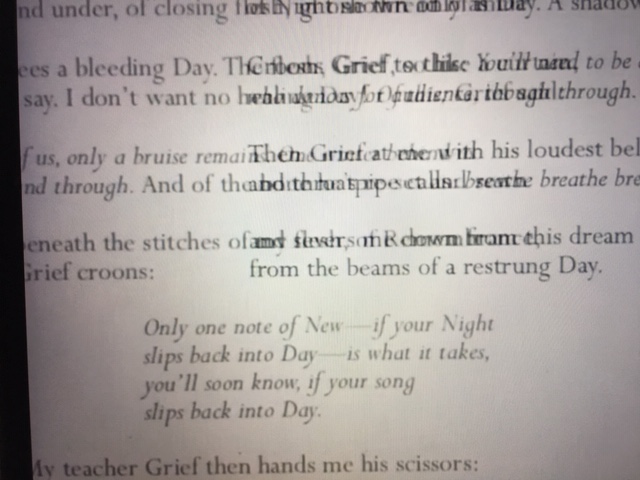
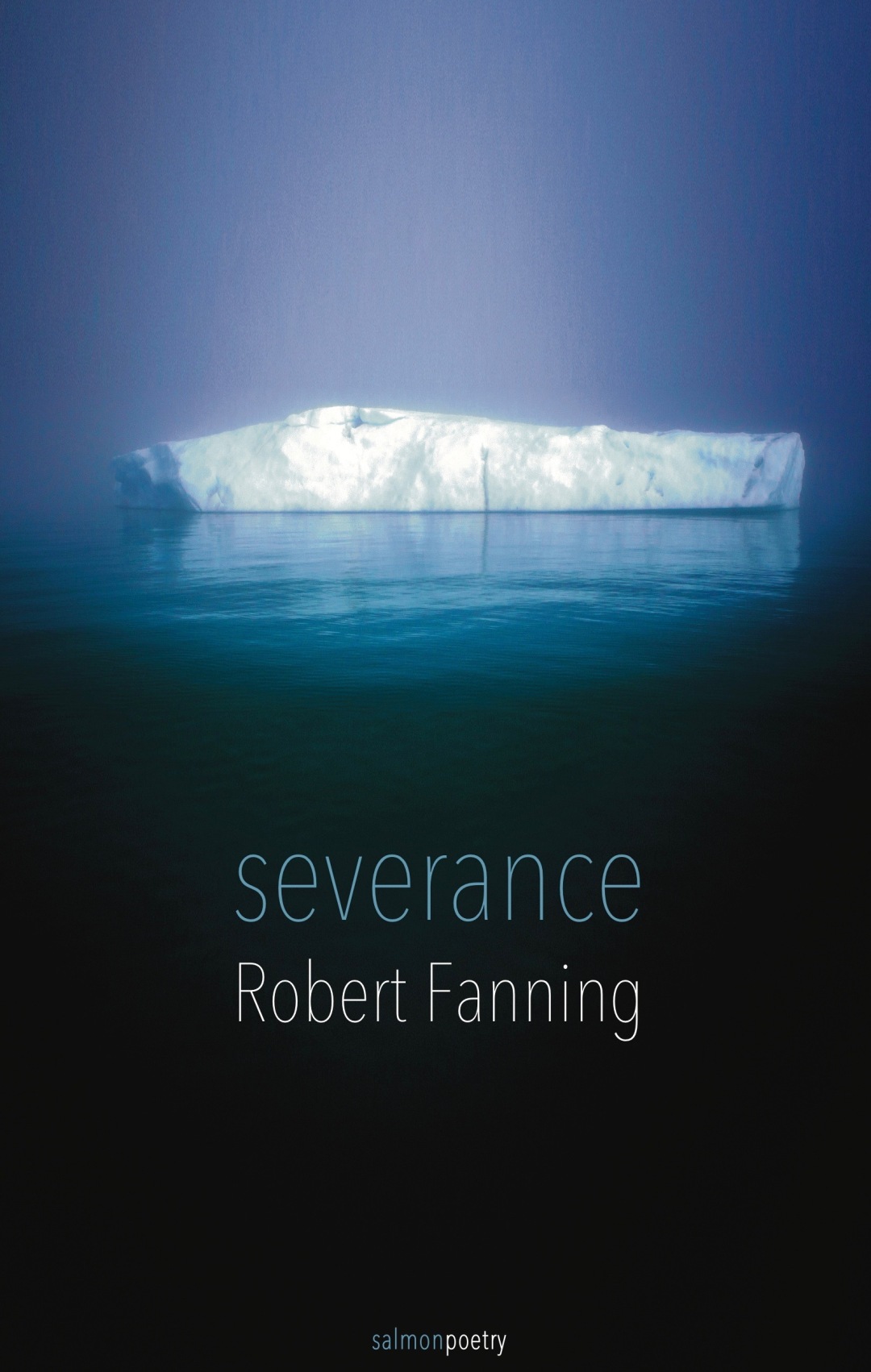
Last evening after my reading in Grand Rapids, an audience member asked me what kind of music I listened to. I told him that was a great big can of good worms, because writing and music for me are inextricably linked. I often listen to music, albeit a very narrow stylistic window of music, when I write. I love Post-Rock, or ambient. No words. Eno’s “On Land” is amazing, and I often listen to that before or while writing. During the writing of American Prophet, it was all Silver Mt. Zion’s album “He Has Left Us Alone but Shafts of Light Sometimes Grace the Corners of Our Rooms,” as well as Miserere by Allegri. That particular soundtrack; that music, was the cloak I wrapped myself in to write. Often, I looked at one of my wife’s photo books of the work of Antony Gormley, as well as her own sculptures, which were inspirational. The photographs of Robert and Shana ParkeHarrison, too. This December, while writing poems in my manuscript “Severance,” I had the film “Heima” by Sigur Ros playing in a window on my desktop while composing. Several of the images in “Severance” are directly from “Heima,” as is, I feel, the mood of the poems. I wonder what this relationship is: this way of setting off sparks to get one’s own creativity going. Of course it helps me get in the zone to read some poems beforehand, too. Often I have to read at least one Dylan Thomas poem to get going. Or others. Sometimes I’ll meditate for 10 minutes or so. Creative foreplay, perhaps! But I don’t like to simply sit down and start writing. It never works. What gets you going?

Zoom

Thanks to all who came out to Literary Life Bookstore in Grand Rapids today for my reading and workshop. In the workshop, entitled “Through the Lens: Micro-Images in Poetry,” we discussed Rilke’s notion of “Seeing,” Plath’s journals, as well as examined poems by Sherry Fairchok, Wesley McNair, Dorianne Laux, Michael Ryan, Charles Simic and Franz Wright, particularly looking at how these poets and others use various angles and lenses to create the short films that are their poems. It was also great to see poet Charlie Brice, who drove from Pittsburgh, as well as some of my local Grand Rapids favorites, poets Zachary Tomaszewski from Literary LIfe Bookstore, and Linda Nemec Foster, former GR poet laureate, and her awesome husband Tony. Next time you’re in Grand Rapids, dear readers: stop by Literary Life--a terrific independent bookseller that supports their community, and does much to publicize the work of local writers. Oh: and Brick Road Pizza. Wow. What an amazing menu.

Wander, Wonder

Thanks to Anya Cobler for inviting me to be the featured reader at the first anniversary of the Oaken Transformations Sculpture and Poetry Walk. The reading took place under a huge oak tree overlooking a beautiful pond and a wooded landscape in Brighton. After poems by John Ganiard, Audra Puchalski, Ben Fidler and Russell Brakefield, I read selections from my works in progress, followed by a great acoustic performance by Brakefield’s bluegrass band, Winter/Sessions. If you get a chance, visit Oaken Transformations and stroll through the sculpture and poetry walk. It is a beautiful, contemplative environment that Anya has created on the grounds of her father Dr. Fred Bonine’s dental offices. I am honored that my poem “What is Written on the Leaves” has a home on a plaque there beside a trail, deep in the woods.

Home: Where the Art Is

A huge Danke Schon across the ocean to the eminently kind Klaus and Kathrin Entenmann, my hosts in Esslingen, Germany, who flew me there this weekend to read my poems to the visitors of the art exhibit entitled “Heimat,” a two-day event in their beautiful home. I also carried with me the work of my wife, Denise Whitebread Fanning, who exhibited some of the pieces from her ongoing “Homeland Security” series. Denise’s work was very well received by visitors to the show.

It was a whirlwind weekend, and only the second time, including Canada, that I’ve read my poems on foreign soil, and the first time to an audience for whom English is not their native language. It was a thrill to read with Eva Christina Zeller, a prominent local poet. Eva and I both built our reading around the theme of “Heimat”–a word that is closely related to the idea of home, but which, among many, does not translate literally into English. Among recent poems related to the theme of ‘home,’ I read two new sonnets, entitled “House of Childhood” and “House of Dust” that I wrote specifically for the event. Eva and I read for large, attentive and appreciative audiences on Saturday evening and again on Sunday morning. Beyond the thrill of the readings and the many fine conversations I had with German artists, poets, art-critics and art-lovers was the treasure of seeing my own poem carved into a traditional German beer table/benches. Local sculptor Matthias Kunisch painstakingly and precisely carved the first several lines of my poem “Failed Existentialist in a Field of Fireflies” in a gorgeous font onto the beer table. As I told my German friends, two of my great loves are poetry and beer, and to see those two loves come together: well, there are no words. Following my second reading, Matthias stood up and addressed me before the audience, thanking me for reading in Germany, and for sharing my poems about the losses of my brother and sister. He said that he was so moved by these elegies that he returned to his studio and swept up the wood shavings of my poem, which took him several hours to carve. He handed me these wooden remains in a small glass jar to take home with me. As I told him, that jar containing the remains of one of my poems will remain on my writing desk until the end of my life. As will my memories of this amazing weekend. A huge thank you also to Matthias, Eva, and Bernard for taking me to Tubingen to see the former home and tower of Friedrich Holderlin, and for Matthias and Kathrin for giving me a tour of beautiful old town Esslingen. I hope to return someday, but until then, I’ve been nourished by many strangers who spoke so kindly about my work, some of whom said they could feel the emotion of my poems beyond the limits of language. To have been told several times by non-native English speakers that the music of my language, even beyond its meaning, was perfectly translated: that was the highest compliment I’ve yet received about my poetry.

It is indescribable, the feeling of this weekend, to have crossed an ocean by plane and by poetry. It is truly one of the highlights of my writing life thus far, and to this I owe innumerable thanks to Klaus and Kathrin Entenmann, our truly superb friends of art and literature, who we miss so greatly in Detroit/Michigan. My “Heimat” expanded this weekend and it includes every place and person with whom I just spent time these recent days.

Charting Territory

Today, in preparation for an upcoming workshop, I’ve re-read Gregory Orr’s fascinating essay “Four Temperaments and the Forms of Poetry.” In this piece, Orr delineates four temperaments to poetry, two he calls “limiting impulses” (Story and Structure) and two he calls “limitless” (Music and Imagination.) Within his essay, he makes many interesting arguments, for example: the idea that poets have innately dominant temperaments, that poems “must fuse a limiting impulse with an impulse that resists limitation” or they work against themselves, that all four temperaments ought to be present in poems to some degree but that only one poet might be said to have possessed all four temperaments in equal vigor. (Guess who.)

The notion of this, of something of a Myers-Briggs test for poets, definitely makes me itchy, the same way such personality indicators do. However, I don’t think it is wholly without value, especially as these impulses I definitely believe in, and I think Orr has made a convincingly simple arrangement of them.

A couple threads in Orr’s essay strike me with particular force today–1) that “A poet is always trying to decide who he or she is or might become…” and 2) that once a poet is self-aware of his/her fundamental temperaments, “the possibilities for growth are two-fold…” either to go further and deeper into their fundamental gift, the risk of which is the narrowing of their focus/style, or to expand, to struggle to nurture and develop other temperaments. I would say that many contemporary poets choose that former route, for reasons either personal or public. They figure out who they are as poets and publish a whole bunch of books that feel like albums of songs that basically use their same favorite chords. These are predictable, dependable poets. You know what you’ll get, even before reading their new book. And you’re often not always disappointed, either.

I’ve realized recently that as a poet I’m definitely struggling to “learn and labor for” as he says, those other gifts, to move into other territories that make me uncomfortable, both as reader and as writer. Lately, my reading has been causing me distinct intellectual discomfort, and having re-read Orr’s essay, I know why. The poets I’ve been reading would, on his chart, fall into probably the entirely opposite corner of this four-square game than the square I play from. I’ve been quite bothered having read now a few books that I know in some ways are fantastic but that just don’t resonate with me emotionally–poems I don’t feel like re-reading, or don’t feel attached to. I’d begun to worry that our moment in contemporary poetry had entirely shifted into an arena that I couldn’t access–poems that have no limiting impulse, neither story nor structure, and very little music–that existed almost entirely in the realm of imagination, that are so open-minded their brains are falling out. That said: I have chosen these books for that reason, with the idea that my discomfort for poems that are so open-ended, fractured, and seemingly devoid of any unity is not simply due to aesthetic whim, but that I’m not actually developing that temperament enough, that I’ve become too reliant upon cohesion and form and story and music. This discomfort is very important. Disequilibrium is learning.

As a writer, I’m also pushing the hurt. I’m pointed straight toward God Knows Where. My new manuscript “Severance” is a clear rebuke, almost point-for-point, of every rule I’ve learned or taught myself in this art. And a definite exploration of the limitless temperament’s other quadrant that I’ve shied from. It is hugely unsettling and terribly exciting. And even if it is failure, which it quite possibly is, it is success, because it has smashed the walls I’ve painstakingly constructed over the last decade. Now my former comfort zone is making me uncomfortable. And my new stylistic territory makes me equally uncomfortable. I have let go the reins and am hanging on for dear life.

I have no place on the square. Ah, thank goodness.

Recently a friend asked me about my progression as a poet; I felt the question implied a sort of defined, goal-oriented career-path type of trajectory. In my answer I spoke of “bumbling along” which gave me guilt afterward. I’ve been at this a long-time, I should have a plan, right. I shouldn’t be such a wanderer, right. I should have a mission statement and a vision, right.

No.

My favorite poets have career “arcs” that wobble, that stray, that dip and curve, that move. My favorite band discographies (The Beatles, Radiohead…) show something of a disdain for linear progression. These are the poems, the books, the songs, the albums that are imperfect, that challenge, that wend and waver. These are the rivers, not the lakes. Just at the moment these poets and musicians get really good at something, often when they’re approaching or have achieved some mastery, they don’t go toward that impulse, but away from it. Tsk, Tsk. Oh Lord may I continue to not have an answer. May the wind rip the maps from me. May I wander much more into that dark.


Frogs Like Poetry

Thanks to all who came out to “Words in the Park” today at Mill Pond Park in Mt. Pleasant. It was a huge pleasure reading with two great Jeffs: Jeffrey Bean and Jeff VandeZande. Bean’s new work–including a poem about a dream where he and his wife are floating at sea on a boat that turns out to be soccer star David Beckham, a series of poems addressing a character named “Loud God,” a poem in which he praises common weeds–and includes many of their uncommonly beautiful and far-from-ordinary names–is fantastic, as always. And VandeZande read a terrific and moving story from Threatened Species, in which a UFO investigator travels to a remote location and confronts an abusive husband. I can’t wait to bring his book with me to the beach this summer to re-read that story, and others.

Beyond the words, the park was so beautiful. I love reading poems outside. A good bunch of students were there. Great spirits. Before the reading we had a great barbecue, threw some baseballs around. We read on a small island surrounded by a pond where frogs croaked incessantly, dragonflies darted, turtles stuck their heads up from the green to listen.

Thanks to recent CMU grad CJ Opperthauser, poet and Editor of The Greatest Lakes Review, for instigating such a great day. He definitely started something, because we’ll be back to that little island to read poems again.

What Guides the Tides

Many artists analyze, perhaps over-analyze their creative lunar calendars. Count me among briefly, I guess, as I’ve recently been considering my own ebbs and flows. We do this like train conductors, when we sense the steam lagging, when we worry if the coal’s running low. In looking at my writing folders from the past decade, it seems late summer/fall bring a good flow, a bounty. Winter’s pretty good, too. Spring, for some reason, though I tend to feel creative and want to write, is apparently a lull time. The inward seasons, it seems, are better. It’s interesting to consider one’s patterns, though it’s about as valuable as horoscopes. Before I go tracking my poetic productivity or reading my creative star chart, I’d just as soon throw such astral readings in the fire. If I’m going to buy in to some notion of my creativity being tied to the moon or the turning of the earth, then you might as well sell me a subscription to The Muse, and I’ll sit around waiting for lightning bolts or winged fairies to come hand me a glowing quill.

You Can’t Wear Pajamas When You Do It, That’s All

To think I could’ve spent 10 minutes and zero calories. I could’ve done it in my pajamas. I could’ve clicked my mouse and ordered them. They would have been on my doorstep in a week, and I would’ve contributed my money to an organization that funds politicians I despise and corporations that are killing our nation.

You won’t believe what I just did, instead. Instead, I got in my car on this rainy day and drove less than a mile. Instead, I walked into the friendly tiny bookstore in my town. Instead, I talked to the clerk. His name was Jean. We talked about our town. We talked about the rain and this cold spring. We talked about my friend Kristin Palm, who went to school with his daughter, who owns this little friendly tiny bookstore in town. As he ordered all of my books, he reminded me of the 3/50 Project, to raise awareness about the importance of buying locally vs. online. I shook his hand. He had a nice smile and asked me to come back into the store. The rain outside was steady; I enjoyed listening to the rain while I perused the magazines and books in the store. There were two cats in the store and the Rolling Stones on the speakers. I picked up some of the books and touched them. (Even smelled a couple.) I then walked back out into the rain. I don’t wear a pedometer, but I’m sure I burned at least 100 calories or so. Maybe less. (Were it a sunny day, I might’ve walked or ridden my bike, though.) But I felt really good, knowing that I was supporting my town’s economy, and knowing that most of the money–in fact, $68 for each $100 I spent, will now go right directly back into my community. Had I done it online, in my pajamas, NONE of that money would’ve gone to my town, and by NOT supporting it, I would have–instead–endangered this friendly tiny bookstore, namely: The Book Shelf, in my town. Jean assured me my books will arrive next week, or so. I will come back to the store and pick them up. Maybe then I will meet his daughter and I will tell her what a great job she’s doing with the store and how glad I am to know that she had the guts to put a bookstore back into our town, after the one she worked in for 20 years, closed. The only thing I’ll regret, is that I’ll have to put on my clothes. That I won’t be wearing pajamas. But I’ll get over it.